Top 5 IT AMC Providers in Dubai: 2026 Comparison Guide
An honest comparison of the five common IT AMC provider archetypes in Dubai, with the criteria that actually matter: response SLA, hardware coverage, spare parts, on-site reach, and total cost of ownership.
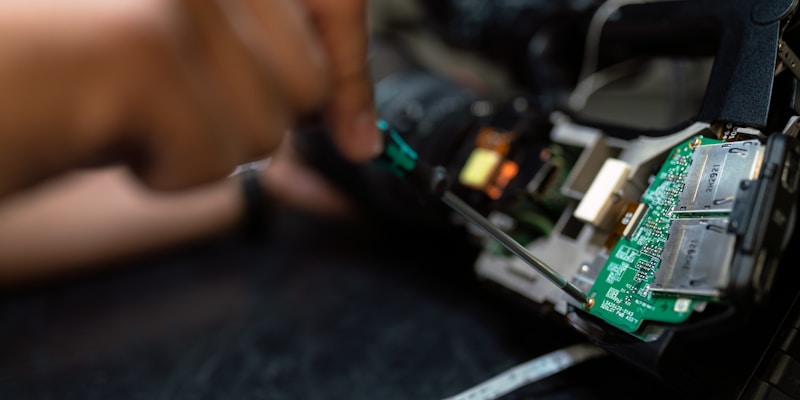
Disclosure: this guide is published by GR IT Services, a Microsoft Cloud Solution Provider operating in Dubai since 2022. We are one of the five providers profiled below. We have written this comparison to be useful, not flattering, and we name the trade-offs of choosing us alongside the alternatives.
What is an IT AMC and why does the provider you pick matter?
An IT Annual Maintenance Contract (AMC) is a written agreement under which a provider takes responsibility for the upkeep of your IT equipment for a fixed annual fee. A good AMC covers preventive visits, hardware repairs, network and server maintenance, spare parts, and a defined response SLA. A bad AMC is a piece of paper that turns into a chargeable callout the moment you actually need help.
In Dubai's market, you will encounter five distinct provider archetypes. Each makes a different trade-off between price, coverage, response time, and accountability.
The five IT AMC provider archetypes in Dubai
1. The local managed IT specialist (e.g., GR IT Services)
Profile: A Dubai-based provider with 10+ engineers, written SLAs, ISO 27001 alignment, Microsoft and Cisco partnerships, and 100+ active AMC clients across the UAE.
Strength: Local accountability, fast on-site response (engineers based in Business Bay), spare-parts cabinet for common SKUs, written priority-tiered SLA (5-min P1, 10-min P2, 30-min P3), monthly KPI reports.
Weakness: Mid-tier pricing. Cheaper than a multinational MSP but not the lowest cost option in the city.
Best for: SMBs and mid-market firms (20-500 endpoints) that want predictable IT spend, real ownership of incidents, and a single provider for AMC + managed IT + cybersecurity.
2. The hardware-vendor-tied AMC (Dell, HP, Lenovo certified partners)
Profile: Resellers contracted by a hardware OEM to deliver maintenance for that brand's equipment. They are excellent on the brand they represent and indifferent to anything else.
Strength: Genuine OEM parts, certified technicians for that brand, strong warranty pass-through.
Weakness: Single-brand focus. If your environment is mixed (Dell servers, HP printers, Cisco switches, Lenovo laptops, mixed-vendor UPS), you end up juggling four AMCs. They typically do not cover Microsoft 365 administration, security operations, or cloud workloads.
Best for: Single-vendor estates where the hardware brand is the dominant cost and the buyer wants OEM-grade parts and a clean warranty story.
3. The boutique freelance shop (1-3 engineers)
Profile: A small team, often a former enterprise IT manager who has set up a consultancy. Personal service, very flexible.
Strength: Low overhead means competitive pricing. The owner usually answers the phone. Decisions are fast.
Weakness: Capacity. When the lead engineer is on leave, sick, or stuck on another client, your SLA quietly evaporates. No ISO certification path, no 24/7 NOC, limited spare-parts inventory. Most do not survive past three years; if they do exit the business, your AMC becomes worthless mid-contract.
Best for: Very small offices (under 20 endpoints) where the cost of a full AMC is hard to justify and the buyer accepts the bus-factor risk.
4. The big multinational MSP incumbent
Profile: A global managed-services brand with a regional office in Dubai. Highly polished sales process, glossy reporting, enterprise contracts.
Strength: Process maturity, deep bench, 24/7 follow-the-sun support across geographies, formal change management, audit-ready documentation.
Weakness: Pricing optimised for enterprise budgets. The minimum-engagement floor is often AED 150,000+ per year. Account teams rotate. The engineer who actually shows up is usually a sub-contractor you have never met. Procurement cycles are slow.
Best for: Large enterprises (500+ endpoints, multi-country footprint) that need formal compliance documentation more than they need fast personal service.
5. The offshore-outsourced low-cost provider
Profile: Headline pricing 40-60% below the local market. Front office in Dubai, delivery from offshore (Cairo, Karachi, Manila).
Strength: Cost. A 24/7 helpdesk model that no UAE-payroll provider can match on price.
Weakness: On-site response. The contract may promise "same-day on-site" but the local field-engineer pool is usually a network of part-time freelancers. SLAs around physical hardware repair are aspirational. Data residency and cybersecurity oversight are weaker. NESA, DFSA and DHA-aligned controls are unlikely to be implementable.
Best for: Cost-sensitive offices that are mostly cloud-based, have minimal on-premise hardware, and treat IT as a commodity utility.
Comparison table: the criteria that actually matter
| Criterion | Local specialist | Hardware-tied | Boutique freelance | Multinational MSP | Offshore low-cost |
|---|---|---|---|---|---|
| Typical annual price (50 endpoints) | AED 60-120k | AED 80-180k | AED 30-60k | AED 200k+ | AED 25-50k |
| Written response SLA | Yes, priority-tiered | Yes, often single-tier | Best-effort | Yes, formal | Yes, but on-site rarely met |
| P1 critical response time | 5 minutes | 15 minutes (remote) | Variable, 30 min - 4 hrs | 15-30 minutes | 15 minutes (remote only) |
| Multi-vendor hardware coverage | Yes | Brand-only | Yes | Yes | Yes (for chargeable callouts) |
| Spare parts inventory | On-site cabinet | OEM stock, 1-3 day lead | Order on demand | Regional warehouse | Order on demand |
| On-site engineer reach | UAE-wide, Dubai-based | Major emirates | Limited | UAE-wide, often subcontracted | Freelance network, variable |
| Compliance support (ISO 27001 / NESA / DFSA / DHA) | Yes | Limited | Limited | Yes | Limited |
| Microsoft / cybersecurity bundling | Yes | Sometimes | Limited | Yes | Sometimes |
| Reporting cadence | Monthly | Quarterly | Ad-hoc | Monthly, formal | Ad-hoc |
| Bus-factor risk | Low | Low | High | Low | Medium |
Which archetype should you choose?
If your priority is fast local response and accountability:
Pick the local specialist (archetype 1). You get a written SLA, on-site engineers reachable by name, and a single point of accountability across hardware, software, cloud and security. This is what most Dubai SMBs and mid-market firms actually need.
If your priority is OEM-grade parts on a single-vendor estate:
Pick the hardware-tied AMC (archetype 2). You will pay a premium but you get genuine parts and certified technicians. Layer a separate managed-IT contract over the top for software, M365, and security.
If you are a sub-20-endpoint office with a low IT budget:
The boutique freelance shop (archetype 3) is reasonable, with eyes open to bus-factor risk. Negotiate written SLAs, a designated backup engineer, and an exit clause that returns documentation and credentials.
If you are a 500+ endpoint multinational with formal compliance needs:
The big MSP (archetype 4) is built for you. The pricing makes sense at your scale. Verify that the named delivery team is actually who shows up, not a subcontractor pool.
If your IT estate is almost entirely cloud and on-site visits are rare:
The offshore provider (archetype 5) can work. Insist on data residency in the UAE, written escalation paths, and a separate emergency on-site contract for the rare day you need someone physically present.
Red flags to walk away from in any AMC quote
- SLA without consequence. A response time without a service credit is a wish, not a commitment.
- Hardware coverage that excludes "consumables". Some providers exclude printer drums, UPS batteries, and SAN drives, the items that fail most often.
- Per-callout charges layered on top of the AMC fee. If every site visit is chargeable, you do not have an AMC, you have a discount card.
- "24/7 support" with no after-hours phone tree. Ask how a P1 ticket gets to a human at 2am. If the answer is email, walk away.
- No documented spare-parts policy. Find out who pays when a switch dies on a Friday afternoon.
- One-year auto-renew with no opt-out window. Keep your exit options open.
How GR IT Services positions itself in this comparison
We are archetype 1: the local Dubai specialist. We compete with the multinational MSPs on process and reporting maturity, with the boutique shops on price, and with the offshore providers on local accountability. Where we lose: we are not the cheapest option, and we do not have OEM-exclusive parts arrangements with any single hardware brand.
If those trade-offs make sense for your business, you can request a free AMC quote at gritservices.ae/get-amc-quote or call +971 56 613 2743.
FAQs
What is the typical IT AMC cost in Dubai for a 50-endpoint office?
AED 60,000 to AED 200,000 per year, depending on the archetype. Local specialists and hardware-tied AMCs cluster around AED 80-120k. Boutique shops and offshore providers are cheaper. Multinational MSPs start higher.
Should I pick a provider based on price?
Only if your IT estate is small, simple, and stable. For anything more, the hidden costs of a cheap AMC, missed SLAs, ad-hoc callout charges, brittle response, exceed the visible savings within the first year.
How do I evaluate a provider's response SLA before signing?
Ask three things: what is the SLA in minutes for P1 / P2 / P3 incidents, what service credit do you pay if you miss it, and what is your published miss-rate from the last 12 months. A credible provider will answer all three.
Can a provider really respond in 5 minutes?
For the initial human response (acknowledgment + triage), yes, this is a reasonable benchmark for a P1 critical incident from a local specialist with a manned helpdesk. Resolution is a different question and depends on the issue.
Disclosure reminder: this guide is published by GR IT Services. Our positioning is in archetype 1. We have tried to be honest about where the alternatives win.
Related Articles
Managed IT Services Dubai 2026: Provider Comparison Guide
A practical comparison of the four common managed IT service models available in Dubai: full outsourcing, co-managed, project-based, and offshore. Which model fits which kind of business, and the criteria that separate a good MSP from a bad one.
Microsoft 365 vs Google Workspace UAE 2026: An Honest Comparison
A practical comparison of Microsoft 365 and Google Workspace for UAE businesses in 2026. Productivity, security, compliance, ecosystem, and the decision criteria that actually matter.